How to Choose the Right Flooring for Your Home
Choosing new flooring is one of the biggest decisions you’ll make during a home remodel. Flooring covers a large portion of your home, plays a major role in the overall design, and is something you’ll be living with every single day.
And with so many beautiful options available, it’s easy to get caught up in choosing a color or style you love. But before you commit to those gorgeous hardwood floors or that trendy tile, there’s something even more important to consider: Does this flooring actually fit your lifestyle?
The best flooring isn’t necessarily the most expensive or the most beautiful option in the showroom. It’s the flooring that works for your home, your family, and the way you use your space.
Let’s break down a few things to consider before making your final selection.
1. Think About How the Room Will Be Used
One of the first things to consider when choosing flooring is where it’s going to be installed.
Different rooms have different needs, and a material that works beautifully in one space might not be the best choice for another.
Kitchens: Kitchens see a lot of foot traffic, spills, dropped food, and general everyday wear and tear. Luxury vinyl plank (LVP) and porcelain tile are both popular options because they’re durable and relatively easy to clean. Hardwood can also be beautiful in a kitchen, but you’ll want to be more mindful of spills and moisture.
Bathrooms: Moisture resistance should be a top priority. Porcelain tile is a great choice for bathroom floors because it’s highly water-resistant and comes in just about every style imaginable. Just make sure the tile is appropriate for floor use and has suitable slip resistance.
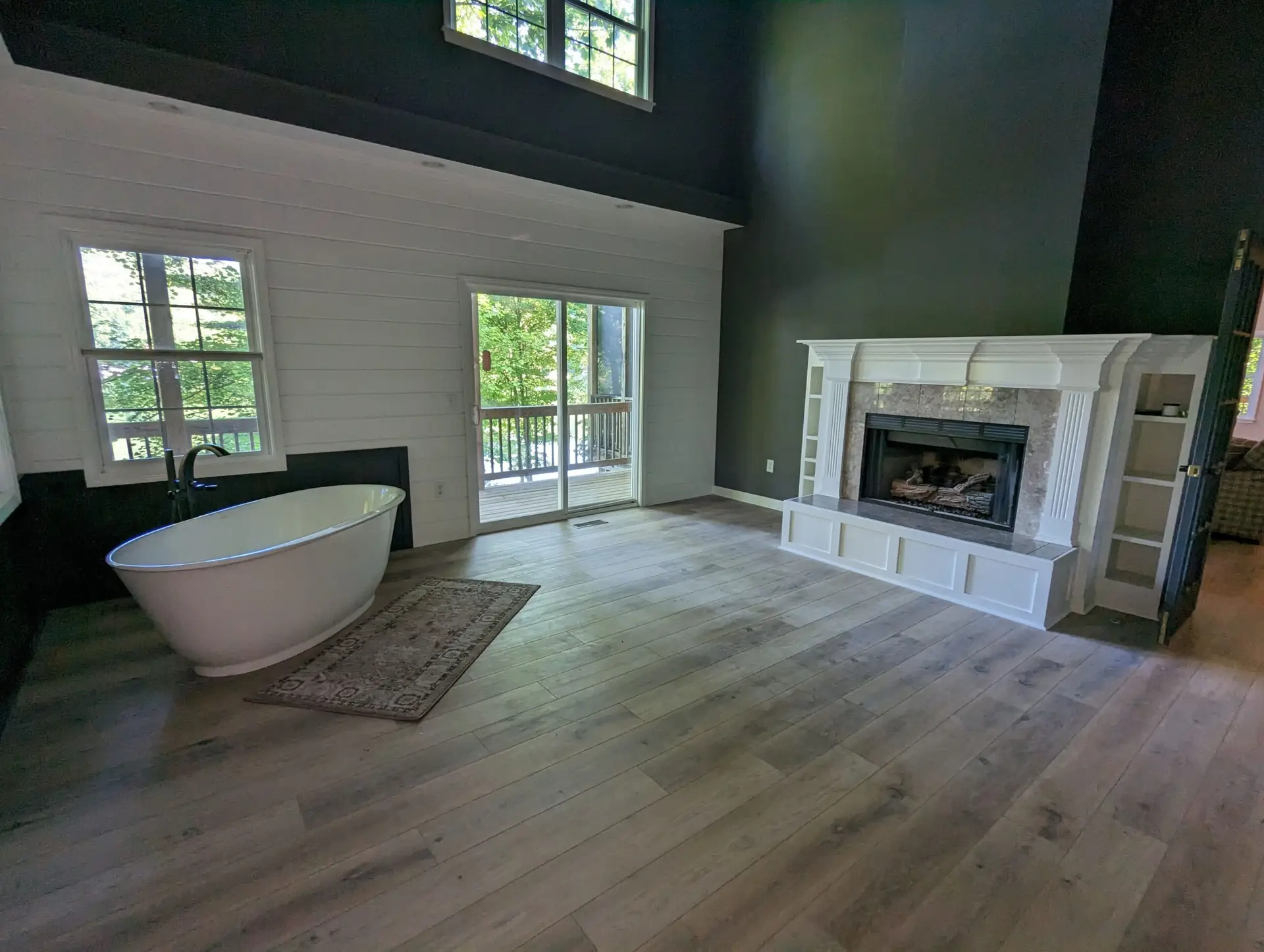
Bedrooms: Comfort often takes priority here. Carpet is a great option if you want something soft, warm, and quiet underfoot. Hardwood or LVP paired with an area rug can also create a beautiful, cozy bedroom.
Entryways and Mudrooms: Think wet shoes, muddy paws, dirt, and heavy foot traffic. Porcelain tile and durable LVP are practical choices for these hardworking areas.
Basements: LVP and tile can both be good options, provided any underlying moisture issues have been addressed. Basements can experience moisture coming through the concrete, so evaluating those conditions before installation is especially important.
The takeaway? Choose flooring based on what happens in the room, not just how you want it to look.
2. Consider Your Kids, Pets, and Everyday Lifestyle
Let’s be realistic. If you have three dogs, young children, or a busy household where someone is always coming and going, your flooring is going to take a little more abuse.
And that’s okay! You just want to choose something that can handle it.
If you have pets, consider how well the flooring will resist scratches from claws, accidents, and the occasional muddy paw print.
Some great options for busy households include:
- Luxury Vinyl Plank (LVP): Available in a variety of wood-look styles, relatively easy to clean, and often designed with wear-resistant surfaces. Look for a quality product with a durable protective wear layer.
- Porcelain Tile: Extremely durable, resistant to scratches, and a good option for homes with pets. It can be harder underfoot, though, which is something to consider.
- Laminate: Many modern laminate products offer excellent scratch resistance, making them a practical option for active households. However, water resistance varies, so check the manufacturer’s specifications.
Does that mean you can’t have hardwood floors if you have pets or children? Absolutely not!
Hardwood can be a wonderful choice, but you may need to accept that scratches and dents are part of living with a natural material. Some homeowners even love the character that develops over time.
It’s really about deciding what level of wear you’re comfortable with.
And here’s another tip: Think about how well your flooring hides everyday dirt. Very dark, uniform floors can make dust, crumbs, and pet hair more noticeable. Mid-tone floors with some natural variation in color and grain can often be a little more forgiving.
3. Don’t Overlook Moisture Resistance
Water is one of the biggest factors to consider when selecting flooring, especially in bathrooms, kitchens, laundry rooms, and basements.
Not every flooring material handles moisture the same way.
Porcelain tile is one of the best choices for moisture-prone spaces. It’s highly water-resistant, durable, and easy to wipe clean. Keep in mind, though, that tile and grout aren’t a substitute for proper waterproofing beneath the finished surface where waterproofing is required.
Luxury vinyl plank is another popular option. Many products are advertised as waterproof, meaning the planks themselves can resist water damage. However, water can still get between planks or underneath the flooring and potentially cause problems with the subfloor.
Hardwood flooring, on the other hand, is more sensitive to moisture. Standing water and changes in humidity can cause wood to swell, cup, or warp.
Laminate flooring varies considerably. While some newer products offer improved water resistance, others can swell if water reaches the core.
If you’re remodeling a basement, it’s especially important to identify and address any existing moisture problems before installing flooring. Even a waterproof flooring product won’t solve a moisture problem underneath it.
4. Be Realistic About Cleaning and Maintenance
Some of us don’t mind putting a little extra effort into maintaining our homes. Others want something they can quickly sweep or mop and move on with their day.
Neither approach is wrong, but it’s worth thinking about before choosing your flooring!
Here’s what to expect from some common materials.
Luxury Vinyl Plank: Generally one of the easier flooring options to maintain. Regular sweeping and occasional damp mopping with a manufacturer-approved cleaner are usually all that’s needed.
Porcelain Tile: Durable and relatively easy to clean, but don’t forget about the grout! Grout lines can collect dirt and may require additional cleaning. Choosing larger tiles can help reduce the number of grout lines.
Hardwood: Beautiful and long-lasting when properly maintained, but you’ll need to be cautious with excessive moisture, harsh cleaning products, and scratches. Some hardwood floors can be refinished to restore their appearance.
Laminate: Usually easy to sweep and clean, but you’ll want to follow the manufacturer’s recommendations regarding water and cleaning methods.
Carpet: Comfortable and cozy, but it requires regular vacuuming and occasional deep cleaning. Spills and pet accidents may also take a little more effort to remove.
Think about your cleaning habits and how much maintenance you’re realistically willing to do.
If you’re someone who wants to spend less time worrying about your floors, a lower-maintenance material might be worth prioritizing.
5. Think About Comfort, Warmth, and Noise
This is something homeowners sometimes overlook when shopping for flooring.
It’s easy to focus on how a floor looks, but don’t forget about how it actually feels to live with.
For example, porcelain tile might be the perfect choice for a bathroom, but it can feel pretty chilly on your feet during an Indiana winter!
If you’re already remodeling a bathroom, that might be a great opportunity to consider adding an electric floor-warming system underneath the tile.
Carpet, on the other hand, naturally feels softer and warmer underfoot. It also helps absorb sound, which can be especially beneficial in bedrooms, playrooms, and upstairs spaces.
Hardwood, laminate, and LVP can all create beautiful living spaces, but they generally don’t absorb sound the same way carpet does.
If noise is a concern, consider an appropriate underlayment where compatible with the flooring product, along with area rugs and other soft furnishings.
And don’t forget about comfort when standing!
If you spend a lot of time cooking, for example, a hard tile floor might not be as comfortable underfoot as some other materials.
These are small details that can make a big difference in how much you enjoy your space.
6. Consider Durability and Long-Term Value
When comparing flooring options, don’t just look at the price per square foot.
You’ll also want to think about how long the flooring is expected to last, whether it can be repaired, and what maintenance or replacement might cost down the road.
Hardwood typically comes with a higher upfront cost, but many solid hardwood floors can be refinished multiple times, allowing them to last for decades when properly cared for.
Engineered hardwood is another option worth considering. It features a real wood surface over a layered core, and some products can be refinished depending on the thickness of the wood veneer.
Luxury vinyl plank can be more budget-friendly and offers a wide range of styles, but it generally cannot be sanded and refinished like hardwood.
Porcelain tile can last a very long time when properly installed, although replacing damaged tiles can sometimes be challenging.
Carpet may have a lower initial cost than some hard-surface materials, but it typically needs to be replaced more frequently, depending on its quality and how heavily it’s used.
Also remember to account for installation costs, removal of existing flooring, subfloor preparation, transitions, and any necessary underlayment.
The least expensive option today isn’t always the most economical choice in the long run.
7. Don’t Forget About Safety and Accessibility
Flooring can also affect how safely and comfortably someone moves throughout their home.
This is especially important if you’re designing a home for aging in place or for someone who uses a wheelchair, walker, or other mobility device.
Consider whether the flooring provides enough traction, particularly in areas where water might be present.
You’ll also want to think about transitions between different types of flooring. Large height differences or raised transition strips can create tripping hazards and make mobility devices more difficult to maneuver.
Low-pile, firmly secured carpet may work in some situations, but smooth, stable, slip-resistant flooring can often be easier for mobility devices to travel across.
If accessibility is a priority, choose materials and transitions based on the specific needs of the person using the space.
8. Bring Flooring Samples Home Before Making a Decision
Once you’ve narrowed down the type of flooring that fits your lifestyle, now comes the fun part—choosing the color and style!
But here’s one of our biggest recommendations: Don’t make your final decision based solely on how flooring looks in the showroom or online.
Just like paint colors, flooring can look completely different depending on the lighting in your home.
A beautiful warm oak floor might look much more yellow in a room with lots of natural sunlight. A dark brown floor might appear almost black in a room without much natural light.
Bring samples into your home and look at them throughout the day.
Place them next to your cabinetry, countertops, trim, wall colors, and existing furniture to make sure everything works together.
You should also consider the size and layout of the flooring.
For example, wider wood-look planks can create a different visual effect than narrow planks, while larger-format tile can reduce the number of grout lines and create a cleaner, more continuous appearance.
And if you’re planning to use multiple flooring materials throughout your home, think about how they’ll transition from one room to the next.
Choosing materials that complement each other can help your home feel more cohesive.
So, Which Flooring Is Best for Your Home?
The answer really depends on your priorities.
If you’re looking for something durable and easy to maintain, luxury vinyl plank or porcelain tile might be a great fit.
If you love the natural beauty and character of wood, hardwood or engineered hardwood might be worth the investment.
If you’re looking for comfort and warmth in a bedroom or family space, carpet might be exactly what you need.
And if you’re trying to balance durability, style, and cost, laminate could be another option worth exploring.
There’s no single flooring material that’s perfect for every home, and you don’t necessarily have to use the same material in every room.
The key is finding the right balance between appearance, functionality, maintenance, comfort, and budget.
Final Thoughts
Flooring is a big investment, and it’s something you’ll use every single day. Taking a little extra time to consider your lifestyle before making a selection can help prevent regrets down the road.
Remember, a beautiful home isn’t just about how it looks in pictures. It’s about how well it works for the people living in it.
At Morgan Remodel, we believe thoughtful design means considering both appearance and functionality. Whether you’re planning a kitchen renovation, bathroom remodel, finished basement, or larger home transformation, choosing the right flooring is an important part of creating a space you’ll love for years to come.
Planning a remodel? Morgan Remodel is here to help you create a home that’s not only beautiful, but designed around the way you live.